Talking to Jesse on the phone, we agreed that this Christmas season lacked the usual punctuation.
On boxing day, I was writing about painting in Calgary for an upcoming project, here's an excerpt:
"I could gauge in each of those books the differences in size, quality of photography, printing and paper, in the reproductions of each painting. I could find thousands of bits of information, all of them one step or more from what I was all the while trying to make in my studio.
I could scream that my work could not be made in a vacuum and needed context and words of its own, all the while criticism and the paintings it spoke of were flattened against the same page. If I tried to hold the photo closer, the words got bigger too. All the while I knew, a least academically, that there was another experience suggested by what I was doing. I could have been looking at the actual painting on a wall, dividing a painting from the words written about it. I could have all the abundance a newly-booming city provided except what was most particular about painting, the autographic."
Merry Christmas and Happy New Year to you all
Showing posts with label Jesse Proudfoot. Show all posts
Showing posts with label Jesse Proudfoot. Show all posts
Sunday, December 30, 2007


Tuesday, July 24, 2007
Toronto Show Opening At Loop Gallery

"Strawberry Alarmist Talk Radio" opened on Saturday at Loop Gallery in Toronto. I am suitably exhausted from a week of drink, installation, visiting and transport.
Some good introductions were had to the Toronto art world. A review will be forthcoming in the Globe & Mail by Gary Michael Dault on Saturday July 29th.
Some tentative steps toward working with a dealer there were made.
Thanks to Dayna and Elliott for the place to stay and the help with installation and all the with divining the meaning in the words and actions of Toronto art folks.
Thanks to Jackie and Jesse for the roses.
Wednesday, May 23, 2007

Monday, April 16, 2007
I've not got anything. I've got a lot of nothing. The Studio is freezing.

photo by Jesse Proudfoot, 1998
Sunday, March 18, 2007
Horror. Terror. Herror. Torror
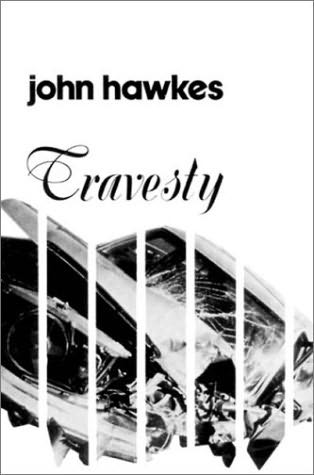
I'm tracking something not mine. Like when I told Ken Moffett that I couldn't paint strength because I had no strong marks that felt like mine. They were all borrowed.
A veil of quiet is all over from the studio and best to keep it and to borrow:
(Didn't want death anywhere near the paintings. Its mention-- with prefix-- in my artist statement makes my asshole close.)
Not mine yet. But then again, when redemption first came up in painting I was priest, paintings were flock, and no sheep un-redeemable(driving on 12th avenue in Vancouver at night, either with Jesse or wanting to tell him or wishing he was the one with me).
"Form in art necessarily is an exertion toward the elimination of fortuitousness and accident and randomness and athwartness, all of that which we may call liveliness-- life being that which doesn't hold still and is recalcitrant to final composure"
""He is a satirist and he is, in a special and restricted sense, an artist, a maker of compositions. The strategies of composition are to be imposed on the deadly chaos of what we may call the facts of life. But Hawkes is also exceedingly stringent in his perceptions, and he will not either reduce the difficulties of the enterprise or meliorate the paradox. The fact is that the strategies of composition never really work-- with the result, for form, by the way, that these intensely composed fictions remain at the quite open-ended and provisional, no less than in the novels, let us say, of Saul Bellow. The dynamic of Hawkes' fictions is this: aesthetic form-- which is to say, art-- is set forth to subdue nightmare randomness, and succeeds only to the point of the contingency of the next and inevitable eruption of that randomness. The stakes are these: art finally implies death, but so does the violence of our lives. And there is a paradigm here: society itself, or history itself, is the deathly imposition of harmonies on human will (the source of which, according to Schopenhauer, is the genitals), on that human willfulness which lacking ht deathly imposition of harmonies commits murders"
From: The Satyr At The Head Of The Mob by Marcus Klein
Published in: A John Hawkes Symposium: Design and Debris. NDP446
PS. There will be a second part to this post tomorrow. I left "Helping Verbs of The Heart" by Peter Esterhazy at the laundromat, and am not one to remember quotes verbatim.
Thursday, March 15, 2007
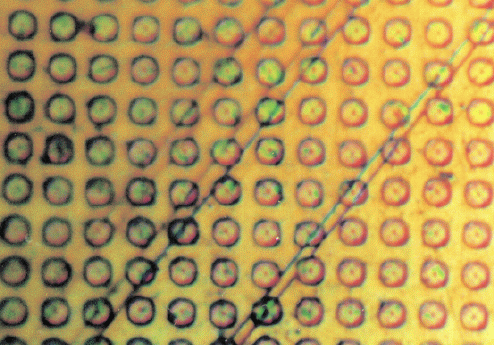
Dots or Stripes. Stripes or Dots.
Insomnia is funny.
In a recent conversation with Jesse I mentioned that every painting hits a point where in order to continue, some time has to be spent laboriously painting. Specifically laborious. Recently...well, for years...this has meant dots(variously masked, painted freehand, layered) or stripes(of all widths, regular, irregular, layered).
The conversation took a turn that put this in some moral light, but I think that forgets a lot for the sake of a very pop psychology interpretation of what goes on.
My words: "Like I've been coasting too long(in the making of the painting) on flash moves.
Jesse's: "Funny how that moral thing comes up"
A much larger recent concern of mine. Well beyond this conversation.
There's really no reason to do anything to a painting. it doesn't particularly matter what I do do to it.
It isn't moral because it is not yet anything. Supposing that anything I do to a painting will do anything is at best fleeting. I will do more or not do more. There is no grand narrative to weigh any mark's value, or not one yet.
The studio is a kind of non-space. There's no eyes, and there's no secrets because there's simply no one around to keep a secret from. I try at once to disappear and treat the painting like something other than me.
The labour is not so neurotic. Only the soreness of my back and staggering blindness exiting the studio differentiate these nights from others.
I have great difficulty connecting the dots. It all comes out like nihilism, but I mean to say it all with a lilting tone.
I cannot see the future from my studio window, or looking in to it. Hell, even the paintings won't give up the ghost until the end.
Friday, March 02, 2007
When I drink, I pink.

Contrary to what this image might suggest, Jesse Proudfoot is my best friend. Taken at my 29th birthday party
From Erin Sheehan's Photos.
Sunday, September 24, 2006
What Came Before After

The summer heat and my working 60 hours a week meant that I spent three months working almost exclusively on one painting. Entitled “The Profit I Raise Out Of This Boy Will Burn Your Eyes Clean”(studio photo above, 84” X 48”), it was the impetus to dig a little deeper into an ongoing discussion I have had with friends over the years about how the possibility of narrative in my painting, and how it differs significantly from music, literature or film. Thanks to Gavin, Justin, Jesse and Heather for their patience on this subject.
Music, literature and film are each contained by a beginning and an end. Each of these forms bring their audience along through time, their form predetermines a clear beginning and end point. A book is opened and begun from the first page, and read to the last. Even if you open the book to the middle and read backwards to the beginning and stop three pages from it, you are playing along a linear line.
In my paintings, the sole comparable narrative is the one that the painting tells of its own creation. The narrative of creation is seen in the singular image of the painting. You look down time, through the last marks made. The linear representation of the narrative is foreshortened and flattened into the single image.
Until now, the solely additive process of layering of paint meant that any mark would have to b protected through until the end if they were to be seen at all in the final image. Switching to acrylics last year, I began to remove sections to reveal older sections underneath. Compositionally this meant uncovering elements from which the subsequent marks had drawn their position, form, colour etc. and worked not as a replacement for the protection of marks(it would be impossible for me to hold in my head what each layer held underneath the visible), but a new way to include older marks later on. Even, in the case of “Making Love To His Eagle”(photo below), finish a painting by revealing the very first layer of paint.
Music, literature and film are each contained by a beginning and an end. Each of these forms bring their audience along through time, their form predetermines a clear beginning and end point. A book is opened and begun from the first page, and read to the last. Even if you open the book to the middle and read backwards to the beginning and stop three pages from it, you are playing along a linear line.
In my paintings, the sole comparable narrative is the one that the painting tells of its own creation. The narrative of creation is seen in the singular image of the painting. You look down time, through the last marks made. The linear representation of the narrative is foreshortened and flattened into the single image.
Until now, the solely additive process of layering of paint meant that any mark would have to b protected through until the end if they were to be seen at all in the final image. Switching to acrylics last year, I began to remove sections to reveal older sections underneath. Compositionally this meant uncovering elements from which the subsequent marks had drawn their position, form, colour etc. and worked not as a replacement for the protection of marks(it would be impossible for me to hold in my head what each layer held underneath the visible), but a new way to include older marks later on. Even, in the case of “Making Love To His Eagle”(photo below), finish a painting by revealing the very first layer of paint.

I can’t tell if this destroys the simile between the narratives of different forms or how it elaborates the one I am working with.
This post represents the beginning of what eventually led to the following posts:
Painting As Obituary
Mark Making and Prayer
Thanks To Flannery O'Connor: A Redemption Song
Subscribe to:
Posts (Atom)