Sunday, October 15, 2006

From the desk of.....

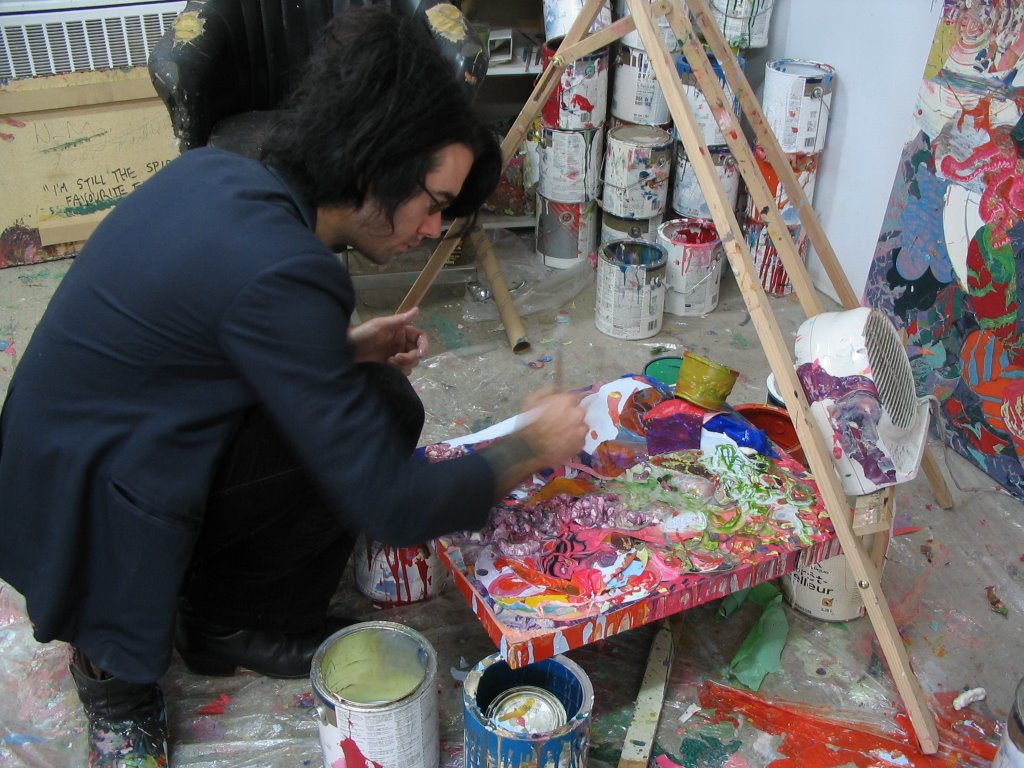
"At twenty-eight, Wil Murray is the most promising young painter
I know. I love the way he has plunged head first into the brand
new, and very much still evolving, acrylic paint medium, seeking
to find his voice. Already he has achieved some bold, spontaneous
perfections, which show true sophistication."

Kenworth W. Moffett Ph.D
Former Curator of Contemporary Art
Museum of Fine Arts, Boston

Tuesday, October 10, 2006

Real mail, in your mailbox


I've been given 250 postcard invites to the november show. If you would like to receive one in the mail, email me your mailing address.

In the meantime

While I am preparing for the opening of my exhibition in Ottawa on the 4th of November, I am doing little writing.
Here's some borrowed content of interest:

- John Hawkes Interview from 1979

- The New Pantagruel, an online magazine I have followed for the past couple of years, now defunct. The goodbye message on their home page is a beautiful piece of writing. I also recommend the essay "On Beginning In Gladness" by James V. Schall, S.J.

Wednesday, October 04, 2006

I did, after all, go to school in Western Canada


Nearly all of my knowledge of paintings comes from books, and the reproductions they contain. It is more remarkable for me to have seen the work of an artist I invoke as influential than not. Maybe this accounts for the sway that the NNP has over my work(for that matter, this may explain the week or so of imitative work after visiting any artist’s studio, or gallery. Right now my colour work looks like Molinari, as I just saw his retrospective at he MDLC Hochelaga-Maisonneuve). I have seen a lot of their work.
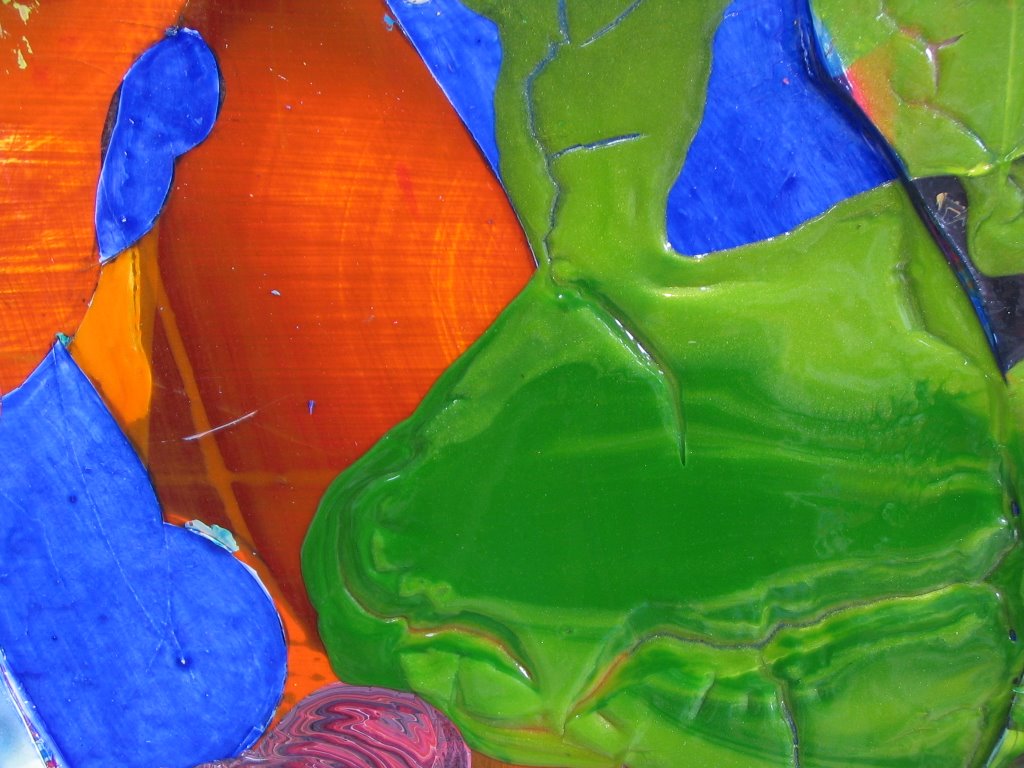
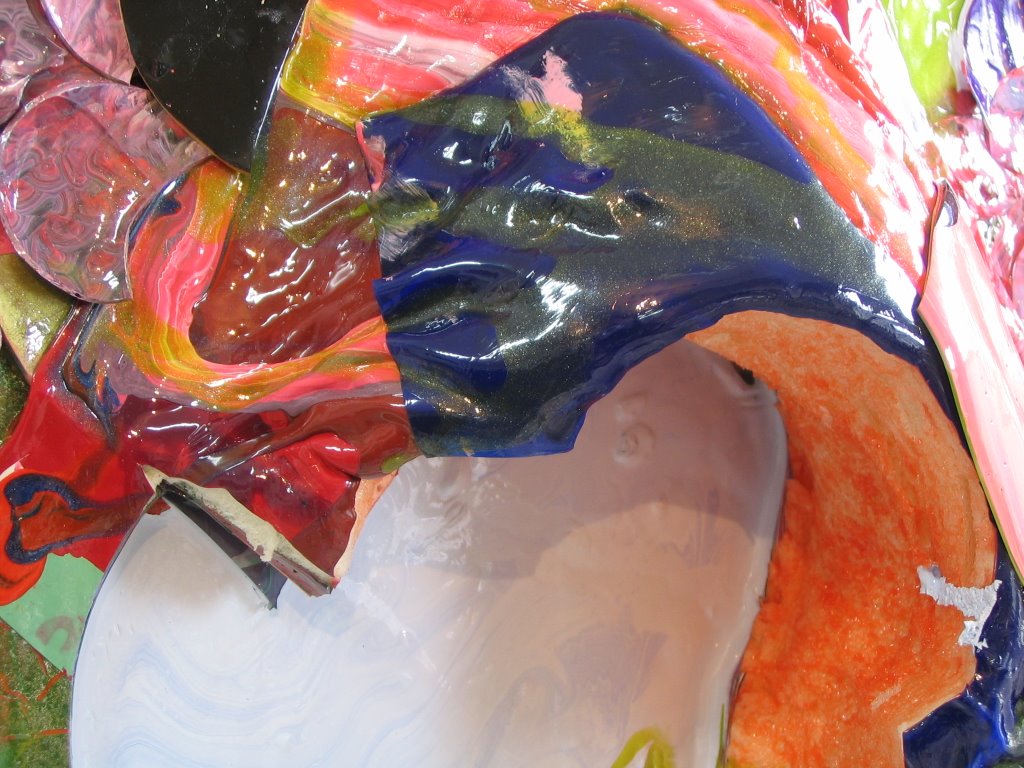
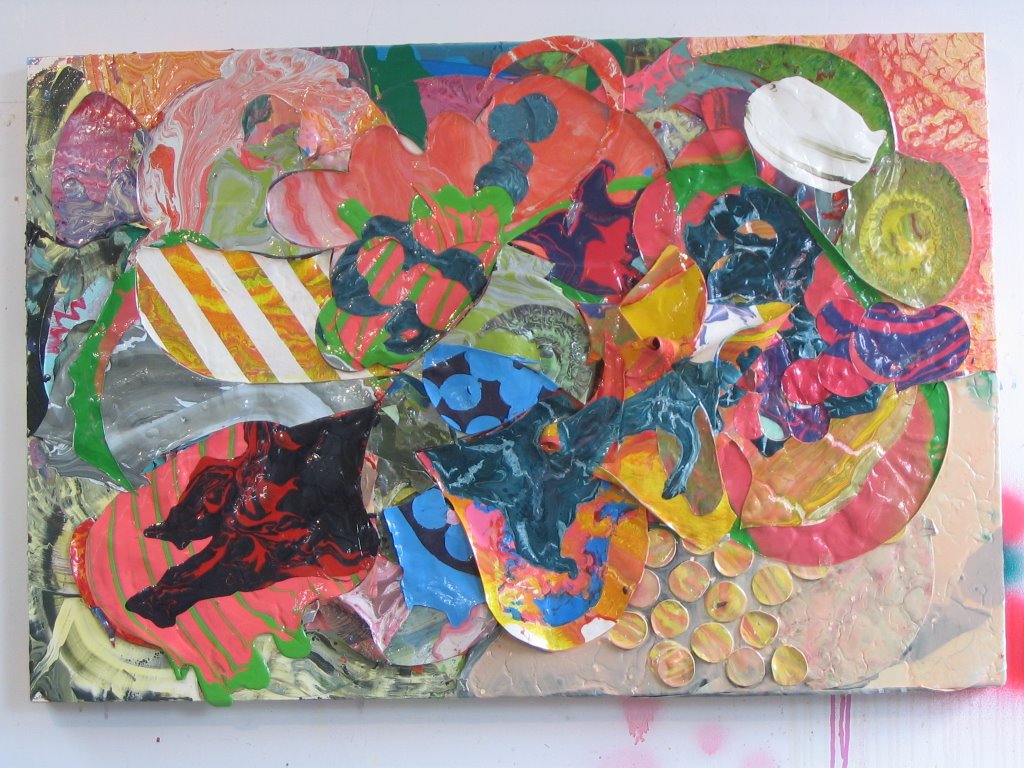
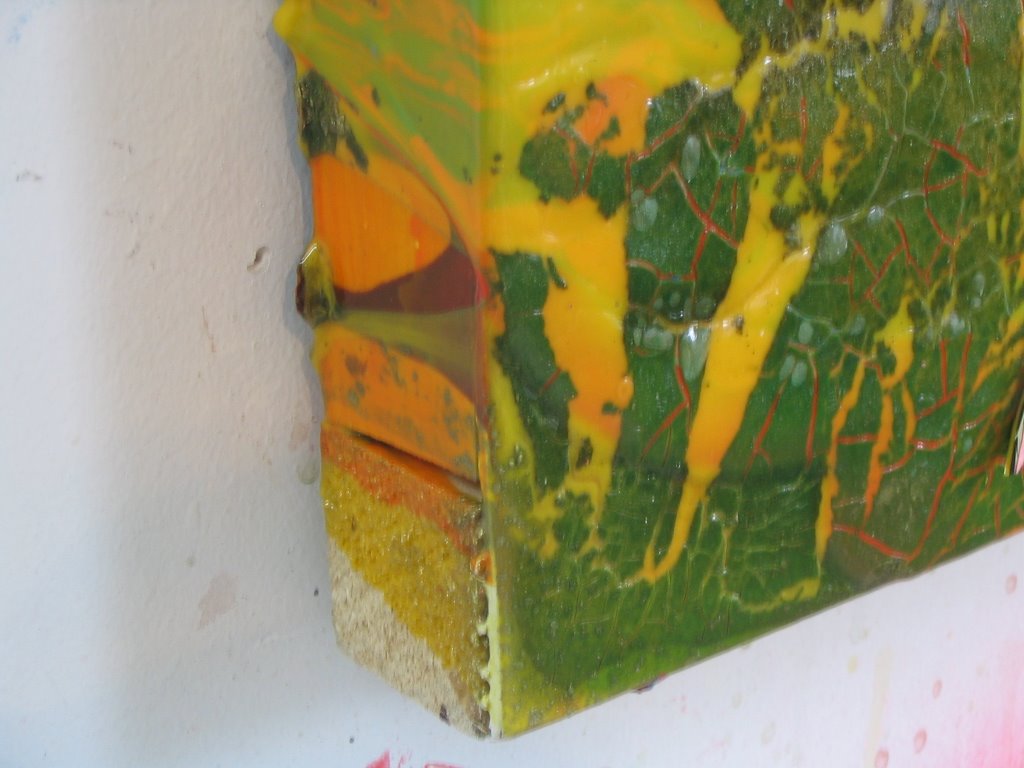
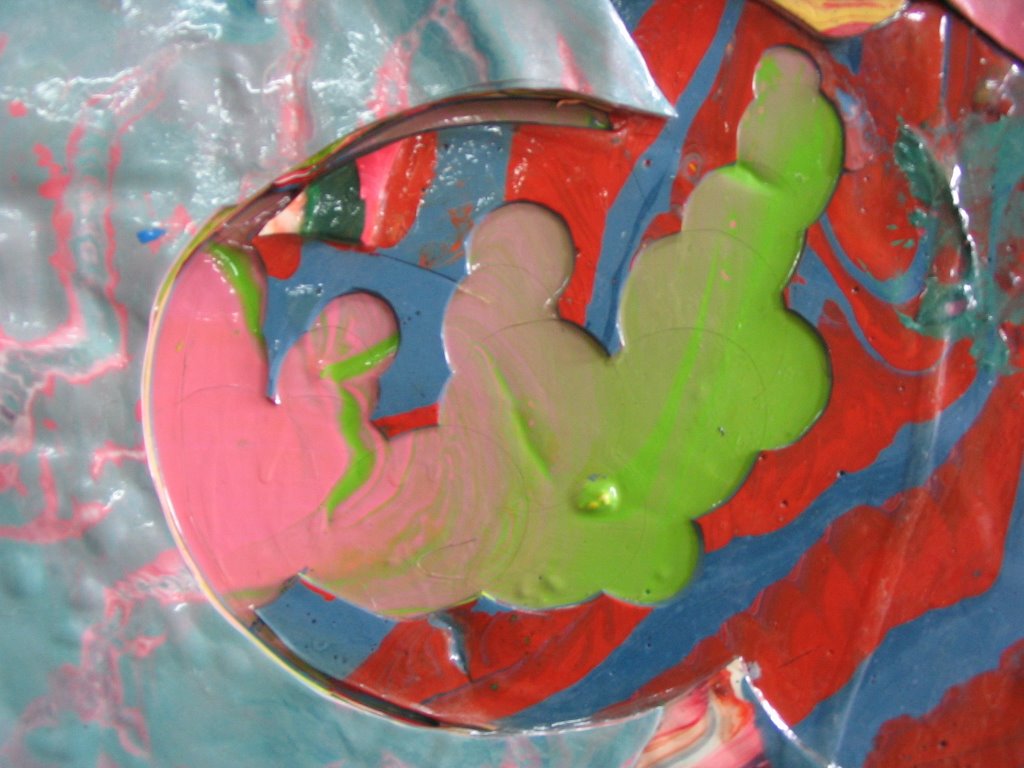
My work is becoming increasingly difficult to photograph. I am making paintings that reproduce poorly. Not a concern in the studio, but one of great concern given how much sway photographs of paintings are given in jury selections, grant applications, magazine articles.

Going to see someone else’s paintings has always been secondary to the psychological and monetary weather patterns that will hasten or delay my trips to the studio to work on my own.
Out of my mouth fly statements which prop up the ideal of paintings being best, or only critiqued when one has seen them with one’s own eyes.
I wrote to Piri Halasz recently and included images of my work. She kindly and politely responded that she could not comment on any work she had not seen in person. As I am apt to do, I responded to the ill-defined question posed by the imaginary interviewer in my head: “This is the only respectable answer she could give, I would have discounted her as a critic had she given any other”. This answer positioned me in the heads of the non-existent audience as an authentic painter drowning in a sea of illiterate conceptualism. A position that is feeling shakier and shakier...no wait: more and more unwanted.


But in secret I couldn’t understand her inability to make devils or angels of paintings she had never seen. I had after all made a champion of Pia Fries(photo above) or Rosenquist(photo top left) and a hack of Dubuffet and Clifford Still without even seeing a stroke.

Sunday, October 01, 2006

Mark Making and Shaky Personal Pronoun Use


The inevitability and simultaneity of the single final image, read by the static viewer looking down time, foreshortens the creation narrative to a point that sequential reading is ridiculous. The narrative is seen simultaneously through its end. Redemptive ends, modest and underwritten from the beginning, cloud the viewer’s eyes with their celebrations of post-death space. My actions, the removal and re-attaching of sections from the same painting, confuse the sequence even further, nudges a sequential reading into the vicinity of the absurd.

Without the possibility of moving along a narrative, as in books or songs or films, inconsistency in personal pronoun use in mark making confuses and celebrates the inevitable heroism of the final composition.

Marks made as:
The I and We of modernism.
The You of pop-art.
The They of contemporary painting.
He as someone outside of me.
He as me, referred to by myself, outside.
I in We’s clothing.
We with I insides.

All of these contained by the inevitable singular end. This embracing I allows the cell walls of affectation, authentic, ironic and sincere to dissolve and allows me to travel between pronouns, and act simultaneously within several pronouns without pursuing the simple translation between two from one to another. Transubstantiation and transmutation are so much more fun than translation.

To attempt, in mark making, consistency in personal pronoun use is to allude to an outside narrative the viewer could move along. An authoritative narrative that reduces the painting to a document describing the irrelevancy of its own form.